

March 2, 2026
Contributor | EV Richmond, Director, GRP|WEGMAN
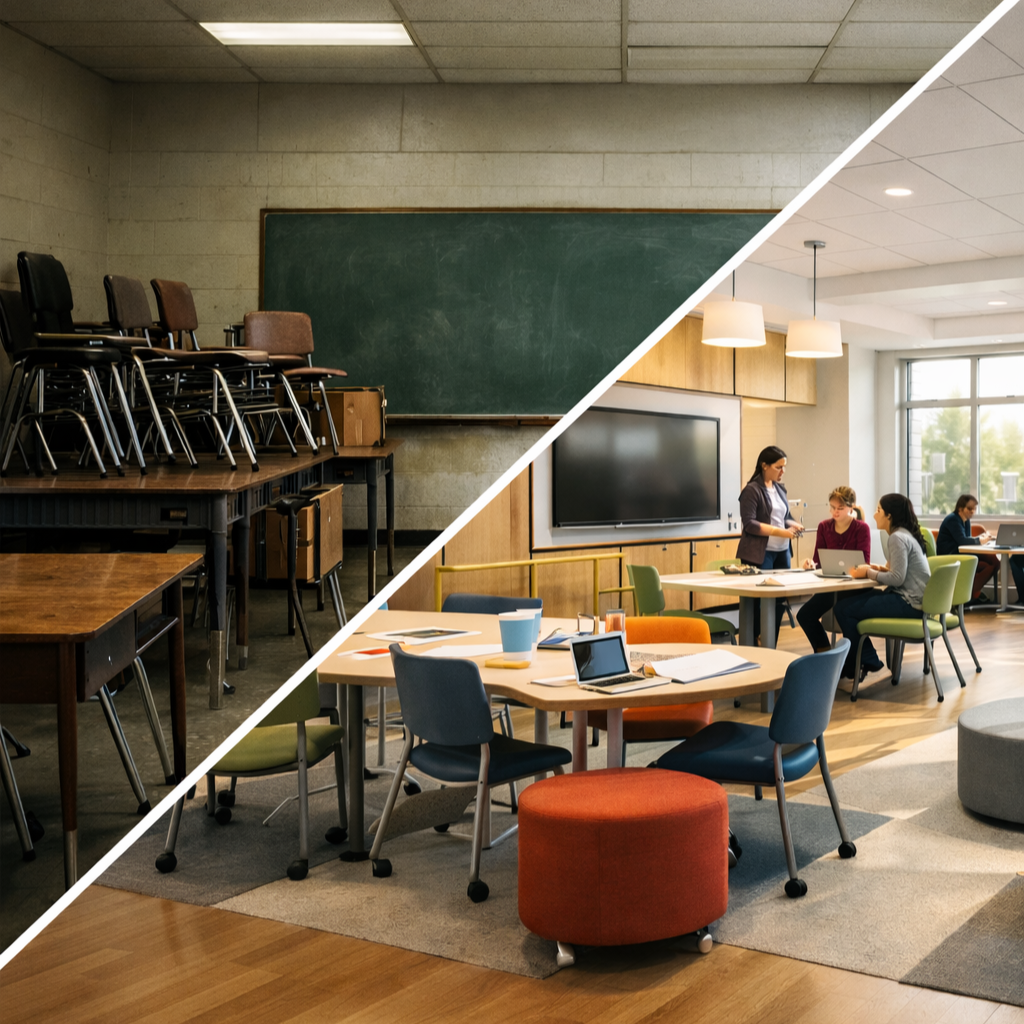
As educational institutions evolve and grow, they often find themselves with underutilized spaces that no longer serve their original purpose. Rather than letting these spaces go to waste, forward-thinking facility leaders are embracing the concept of adaptive reuse. By transforming these neglected areas into functional, modern environments, schools and universities can maximize their existing resources and create spaces that inspire the entire community.
Adaptive reuse offers numerous benefits for educational facilities. First and foremost, it is a cost-effective solution for schools with limited budgets. Repurposing existing spaces eliminates the need for new construction, which can be expensive and time-consuming. Additionally, adaptive reuse projects often have shorter timelines, allowing schools to quickly adapt to changing needs and demographics.
Another advantage of adaptive reuse is its positive impact on the environment. By repurposing existing structures, schools can reduce waste, conserve resources, and minimize their carbon footprint. This commitment to sustainability sets a positive example for students and demonstrates the institution's dedication to responsible stewardship.
Adaptive reuse also provides an opportunity to create unique, multi-functional spaces that support modern learning styles — and in some cases, entirely new community purposes.
Fill out this form and someone from our team will get back with you shortly!


